Building Acoustics
Consulting in Boise, Idaho
Sound Isolation, Interior Acoustics, and Mechanical Noise Evaluation
Building acoustics focuses on how sound behaves inside a structure and how well it is controlled between spaces. Projects with shared walls, multi-story layouts, or complex building systems often require evaluation to support occupant comfort and functional building performance.
Altitude Acoustics provides building acoustics consulting for commercial, government, and residential developments throughout Idaho, Alaska, and Salt Lake City. We work with project teams to assess sound isolation, interior acoustic conditions, and noise generated by mechanical systems.
In most situations, the objective is straightforward: improve acoustic performance, support comfortable interior environments, and address applicable building requirements.
Request a Consultation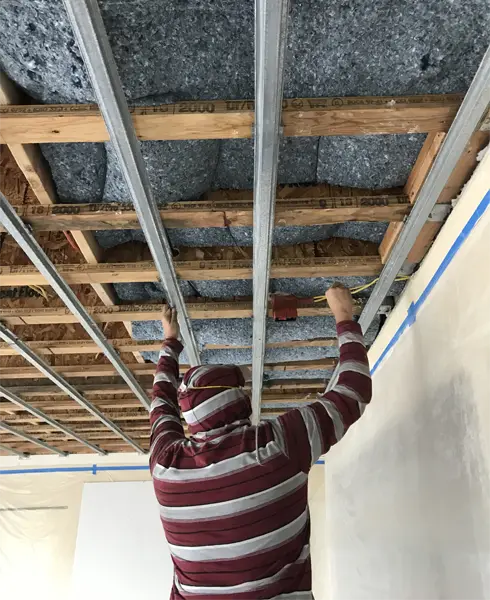
Sound Isolation and
Assembly Performance
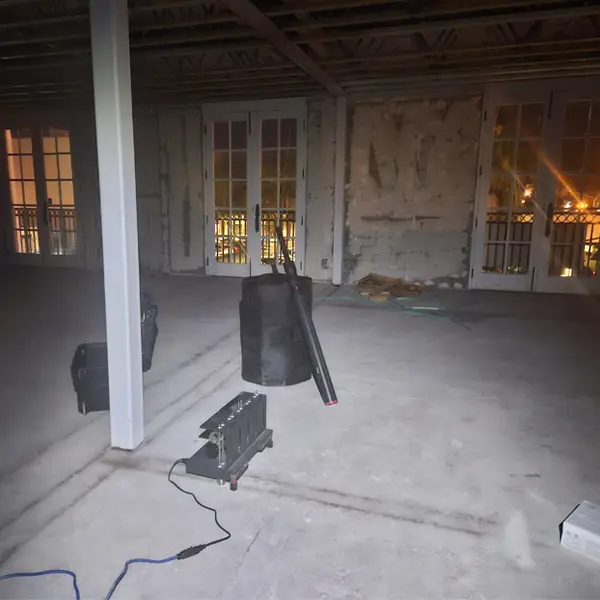
Sound isolation is important for privacy and overall building comfort. Walls and floor-ceiling assemblies must limit airborne sound (STC) and structure-borne sound (IIC) and vibration between spaces.
We evaluate expected assembly performance based on project design and construction details. This includes review of Sound Transmission Class ratings for wall systems and Impact Insulation Class performance for floor-ceiling assemblies.
Additional review may include partition re-design, materials selection, and flanking path considerations.
Recommendations focus on practical construction methods that support reliable acoustic performance. We can conduct Construction Administration and support the CA phase through on-site walk-throughs to identify weaknesses of in-progress construction of new buildings as well as previously constructed, existing buildings that are not performing as expected or desired.
Interior Acoustic
Performance
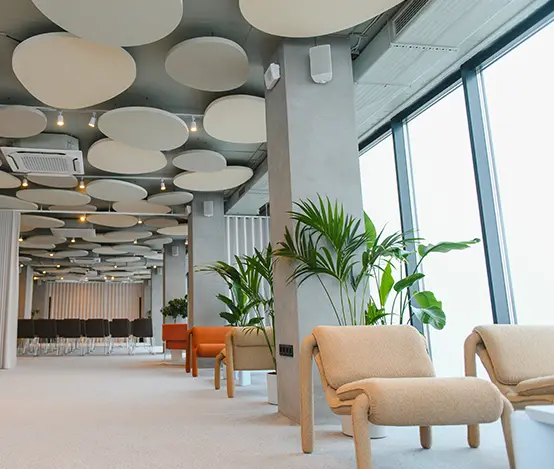
Interior sound quality affects how a space is experienced by occupants. Offices, residential buildings, and public facilities each require different acoustic considerations to support their intended use. Controlling reverberation is key in today’s designs, where hard, reflective surfaces and “open concept” floorplans with modern design aesthetics often create rooms that are too “lively” and highly reflective and causing challenges with conversation and being heard.
Altitude Acoustics evaluates room acoustics to help create balanced interior sound environments.
This may include review of reverberation time (RT) characteristics and reflected noise concerns in sound-sensitive spaces, and recommendations for sound-absorptive materials.
The goal is not just quieter spaces, but spaces that are enjoyable to be in and function as intended.
Mechanical and
Building System Noise
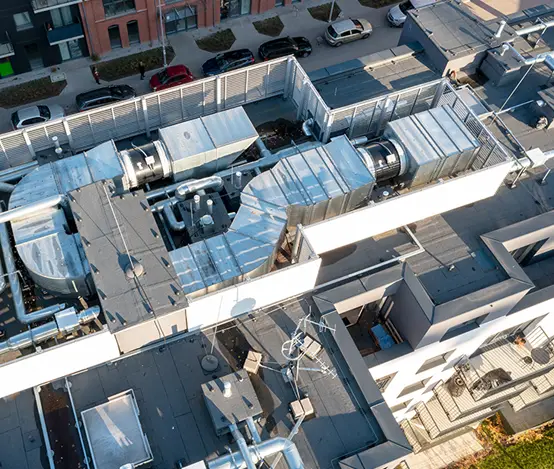
Mechanical systems are a common source of unwanted indoor noise. HVAC equipment, plumbing systems, and electrical components can introduce sound and vibration that affect occupant comfort.
We evaluate building systems to identify potential noise concerns and recommend practical control strategies. This may include equipment noise review, sound transmission assessment, vibration considerations, and noise control recommendations for building services.
Contact Us Today
If your project requires sound isolation evaluation, interior acoustics analysis, or mechanical system noise review, contact Altitude Acoustics to discuss your needs.
Project information can also be submitted through the Contact page.
- 10400 West Overland Road #282,
- Boise,
- ID
- 83709